
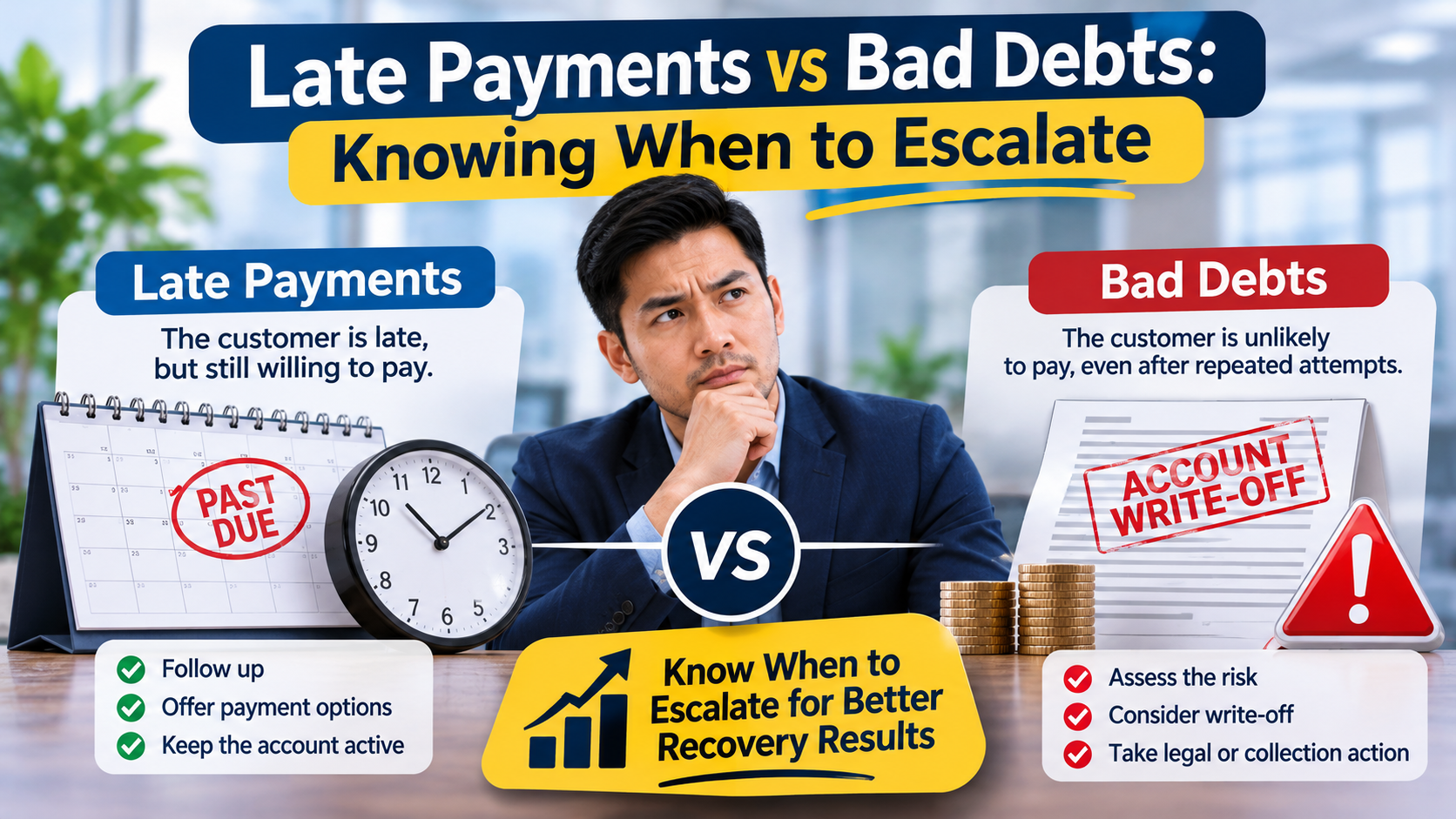
Knowing when to escalate late payments is crucial when routine collection efforts are no longer producing results. Leaving overdue accounts unresolved can strain cash flow needed for daily expenses and increase default risk.
According to reports, Australian small businesses were paid an average of 6.0 days late in June 2026 and lost an average of $15,257 in the last financial year. Identifying delayed payments early allows businesses to respond promptly and prevent outstanding amounts from compounding.
Key Takeaways
- Escalate once reminders, a follow-up call, and a final demand have been ignored.
- A late payment is usually a delay, while a bad debt is unlikely to be paid without action.
- A letter of demand is the usual step before involving an agency or the courts.
- Time limits apply, so avoid leaving overdue accounts unaddressed.
Understanding the Difference Between Late Payments and Bad Debts
A late payment is an invoice that remains unpaid after its due date, but the customer may still be responsive and willing to pay. On the other hand, a bad debt is an amount that is unlikely to be recovered.
Research found that 41% of Australian small and medium-sized businesses receiving late payments typically wait over 14 days past the due date, while 17% wait for more than a month. These delays underscore how a payment can move from a temporary setback to a more serious collection concern. If efforts to recover consumer unpaid debts continue to be unsuccessful, the unpaid balance may eventually become a bad debt.
When to Escalate Late Payments to Protect Cash Flow
Not every late payment requires immediate escalation, but certain patterns could suggest that routine follow-ups are no longer enough. Consider taking further action if you notice any of these warning signs:
- Repeat Missed Payment Commitments – If the debtor repeatedly misses payment dates or instalments despite reminders or arrangements.
- Unanswered Recovery Attempts – Consider escalating when reminders, follow-up calls, and a final demand have all gone ignored.
- Signs of Financial Distress – Look for signs, such as dishonoured payments or insolvency proceedings, as these may indicate that the customer is struggling financially.
- No Clear Payment Plan – Escalate when the customer cites financial difficulties or continues to delay payment without proposing a clear and workable payment plan.
Should these warning signs persist, issuing a formal letter of demand is often the best course of action before considering legal proceedings. The Australian government’s guidance on writing a letter of demand recommends giving the debtor a clear deadline for payment before further action is considered.
How Professional Debt Recovery Services Can Help
If the debt remains unpaid, a specialist agency offering debt collection in Australia can take over the recovery process. These professionals use industry expertise and robust recovery methods to communicate with debtors and pursue outstanding payments on your behalf.
Time limits should also be considered. According to Legal Aid NSW, court action generally must begin within six years of the latest relevant event: when the debt became owed, the last repayment was made, or the debt was last acknowledged in writing. Timing differs between states and territories, so check the rules that apply to your debt.
Take the Next Step Towards Debt Recovery
Late payments do not inherently mean a bad debt, but prolonged non-payment can complicate recovery efforts. Knowing when a delayed payment may become a potential bad debt allows firms to take necessary action before matters are further aggravated.
Working with a reputable agency like Bluechip Collections allows you to focus on running your business while the team handles debt recovery from start to finish. With our structured recovery processes, we can help you settle outstanding payments while minimising the burden on your firm.
Reach out to Bluechip Collections via our contact page or call 1300 462 114 to resolve your unpaid debts.