
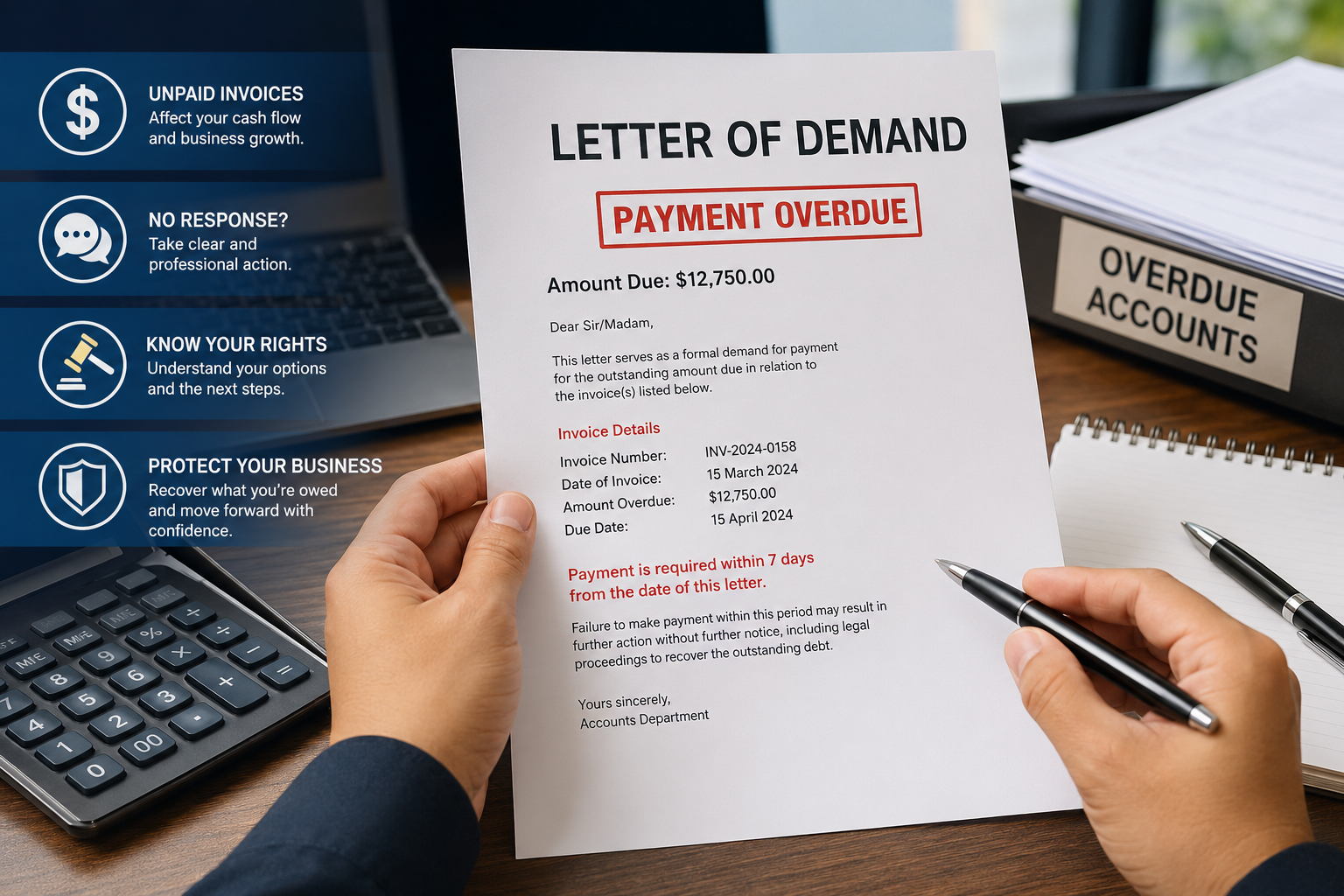
A letter of demand may be ignored for several reasons, including unclear payment deadlines, overly emotional language, unrealistic demands, missing supporting information, or repeated threats that are never followed by action.
For businesses dealing with overdue invoices, an effective letter of demand should clearly identify the debt, explain what payment is required, provide a reasonable deadline, and outline the next steps if the matter remains unresolved.
According to Accountants Daily, delayed payments continue to affect many Australian businesses and can place significant pressure on cash flow. When invoices remain unpaid and debtors fail to respond, businesses may need to review their internal collection process and consider escalating the matter appropriately.
Understanding why a debtor is not responding can help you take more effective action and improve your chances of recovering the outstanding amount.
Key Takeaways
- A letter of demand is more likely to be ignored when the payment deadline is unclear or the requested action is ambiguous.
- Emotional language, unrealistic deadlines, and repeated threats can reduce the effectiveness of debt recovery communication.
- A professional letter should clearly identify the debt, the amount required, the payment deadline, and the possible next steps.
- If internal collection efforts are unsuccessful, a professional debt recovery service may help businesses escalate the matter through an appropriate and compliant process.
Why Is Your Letter of Demand Being Ignored?
A debtor may ignore a letter of demand because they do not believe immediate action is necessary, the information provided is unclear, or previous collection attempts have not resulted in further action.
In some cases, the problem may also be related to the way the demand is written or delivered.
1. The Payment Deadline Is Unclear
A vague deadline can give a debtor additional opportunities to delay payment.
For example, phrases such as “as soon as possible” or “immediately” may not provide a clear date by which payment is expected.
Instead, specify a reasonable and exact deadline, such as:
“Payment of the outstanding amount is required by 15 September 2026.”
A clear deadline helps establish expectations and makes it easier to determine when further action may be necessary.
2. The Tone Is Too Emotional
It is understandable for businesses to become frustrated when invoices remain unpaid. However, aggressive or emotional language can make a letter of demand appear unprofessional and may reduce the likelihood of productive communication.
A more effective approach is to remain factual and objective.
Your letter should focus on:
- The outstanding invoice or debt
- The amount currently due
- Relevant invoice or account details
- The payment deadline
- Available payment options
- The next steps if payment is not received
A professional tone can help communicate that the matter is being handled seriously while maintaining an appropriate business relationship.
3. The Requested Timeframe Is Unrealistic
Demanding payment within a few hours may not be practical, particularly when dealing with businesses that have internal approval or accounting processes.
A reasonable deadline gives the debtor an opportunity to review the request and arrange payment.
The appropriate timeframe may depend on the circumstances, the existing agreement between the parties, and applicable legal requirements.
4. You Have Made Threats Without Taking Further Action
Repeated warnings without follow-up action can reduce the perceived urgency of your collection efforts.
If previous letters have stated that further steps would be taken but nothing happened, a debtor may assume that future demands will also be ignored.
Any stated next step should be realistic, appropriate to the situation, and consistent with applicable laws and regulations.
How to Make a Letter of Demand More Effective
An effective letter of demand should make it easy for the recipient to understand exactly what is required and what may happen if the matter remains unresolved.
Clearly Identify the Outstanding Debt
Include relevant information such as:
- The debtor’s name or business name
- Invoice numbers or account references
- The outstanding amount
- The original payment due date
- Any relevant agreements or previous communication
Providing clear information reduces the possibility that the debtor can claim they do not understand the reason for the demand.
Provide a Specific and Reasonable Payment Deadline
Avoid vague language.
Instead of saying:
“Please pay immediately.”
Use a specific date and clearly explain how payment can be made.
This creates a clear timeframe for both parties and provides a documented record of your request.
Explain the Next Steps Clearly
Your letter should explain what action you may consider if payment is not received.
Depending on the circumstances, this may include escalating the matter internally, seeking professional debt recovery assistance, or obtaining legal advice about available options.
Avoid making threats that you are unwilling or unable to act upon.
Keep a Record of Your Communication
Maintain records of:
- Invoices
- Contracts or agreements
- Previous payment reminders
- Emails and correspondence
- Letters of demand
- Payment arrangements or promises to pay
Accurate documentation can help businesses understand the history of the account and support any future recovery process.
When Should You Consider Professional Debt Recovery Assistance?
If internal reminders and letters of demand have not resulted in payment, businesses may consider seeking assistance from an experienced debt collection agency.
A professional recovery team can review the available information, communicate with the debtor, and help businesses understand the available recovery options.
For businesses looking for a debt collection agency in Melbourne, professional assistance may be particularly useful when accounts have remained unpaid despite repeated internal collection attempts.
Experienced debt collection companies can also help businesses establish a more structured approach to overdue accounts while focusing on appropriate communication and compliance.
Frequently Asked Questions
Why do people ignore letters of demand?
People or businesses may ignore a letter of demand because they dispute the debt, are experiencing financial difficulties, do not consider the demand urgent, or believe that no further action will be taken. In other cases, unclear information or an inappropriate communication approach may contribute to a lack of response.
What should be included in a letter of demand?
A letter of demand should generally identify the parties involved, explain the outstanding debt, provide relevant invoice or account information, state the amount being requested, provide a clear payment deadline, and explain the next steps that may be considered if the matter is not resolved.
How long should you give someone to respond to a letter of demand?
The appropriate response period can depend on the circumstances, the agreement between the parties, and applicable requirements. A reasonable and clearly stated deadline is generally more effective than an unrealistic demand for immediate payment.
What should you do if a debtor still does not respond?
If a debtor does not respond, review your documentation and previous communication before deciding on the next appropriate step. Depending on the situation, this may involve further internal collection efforts, professional debt recovery assistance, or obtaining legal advice.
Protect Your Business Cash Flow
Unpaid invoices can affect cash flow, business operations, and the resources available to support future growth.
A clear and professional debt recovery process can help businesses manage overdue accounts more effectively. This includes setting clear payment expectations, maintaining accurate records, communicating professionally, and taking appropriate action when internal collection efforts are unsuccessful.
Establishing strong payment criteria can also help reduce the risk of future late payments and improve the overall management of accounts receivable.
Need Help Recovering an Overdue Business Debt?
If your internal collection efforts are not producing results, Bluechip Collections can help you explore appropriate options for managing overdue accounts and recovering outstanding invoices.
Our team can assess your situation and help develop an appropriate recovery approach based on the information available.
To discuss your overdue accounts, contact Bluechip Collections through our contact page or call 1300 462 114.